
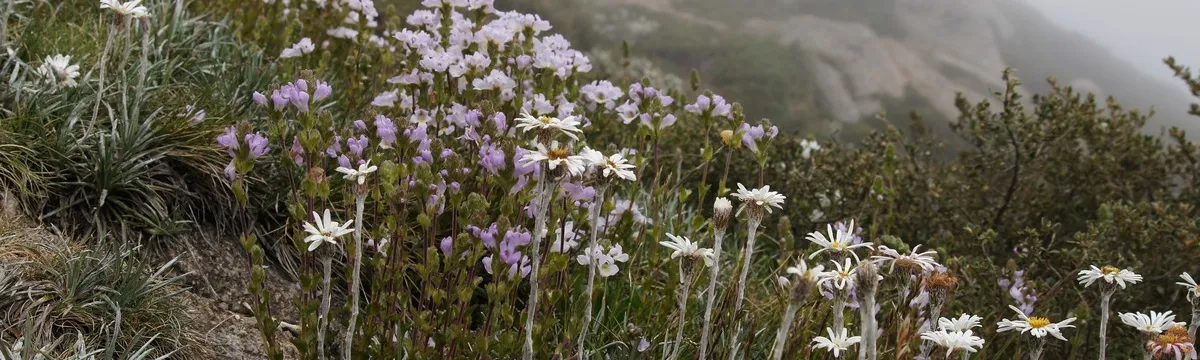
Long-term changes in an Australian alpine plant-pollinator network: understanding drivers and functional implications
Discover how four decades of change have reshaped the Australian Alps’ pollinator networks, revealing what long-term ecological data can teach us about the future of biodiversity, ecosystem resilience and conservation in a changing climate.
Speakers
Content navigation
Description
Pollination is an essential ecological process that is under threat from global change. Plant-pollinator interactions confer the maintenance of ecosystem function and affect how communities respond to disturbances. Previous studies have revealed that anthropogenic disturbances can cause species losses, altered abundances, and phenological shifts in plant-pollinator communities. Linking these assembly drivers to changes in interactions would reveal the mechanisms underlying downstream functional changes, such as altered pollination. We lack an understanding of how Australian alpine communities have changed across relevant temporal scales. A central theme of my thesis is the resampling of Inouye and Pyke’s survey of flowering phenology and plant-pollinator interactions in Kosciuszko National Park in the summer of 1982-83.
In this thesis, I evaluate the temporal dynamics of plant-pollinator networks in the Australian snowy mountains. I examine assembly drivers, network structure, and species roles across four decades in the Australian snowy mountains. The results revealed environmentally-driven compositional changes of the plant-pollinator communities, including disproportionate declines in certain taxa, translating to altered functional roles and assembly drivers. Overall, the findings highlight the value of historical collections and datasets for understanding how future anthropogenic change will affect vulnerable ecological communities.
About the speaker
Josh is a PhD candidate at the Fenner School of Environment and Society at The Australian National University, specializing in plant-pollinator interactions and plant reproductive function. His research focuses on short and long-term temporal dynamics in Australian alpine plant-pollinator networks. He is particularly interested in using historical datasets to understand how environmental changes affect important drivers of plant-pollinator network assembly. Josh values collaborations with taxonomists as well as novel biodiversity techniques to improve representation of Diptera in studies of plant-pollinator interactions.
Location
Frank Fenner Seminar Room
The event will also be available to watch online via this Zoom link.