

Not the greatest glider: first study puts Australia’s biggest glider to the test
Australia’s largest gliding marsupial may not be the country’s best glider after all, according to new research from The Australian National University (ANU) that challenges a decades-old belief about how far southern greater gliders can travel through the forest canopy.
Using the first scientific measurements of southern greater gliders in the wild, researchers found the endangered species glides shorter distances and at steeper angles than previously thought, making them more vulnerable to habitat fragmentation.
Lead author Dr Ana Gracanin from the Fenner School of Environment and Society said the findings challenge long-held assumptions about one of Australia’s most iconic native mammals.
“Greater gliders are often said to glide up to 100 metres, but until now nobody had scientifically measured what they can actually do in the wild,” Dr Gracanin said.
“Instead, the longest glide recorded during the study was just under 50 metres, challenging a claim that have been repeated for decades.
“The term ‘greater’ refers to their large body size; they are Australia’s largest gliding marsupial species. What we have found is that greater gliders are also not the greatest at gliding!”
The research team measured 41 glides across five forest locations in New South Wales using infrared cameras, thermal imaging and night-time observations.
They found greater gliders launched from an average height of 22 metres, travelled an average horizontal distance of 19 metres and descended at an average angle of 43.5 degrees.
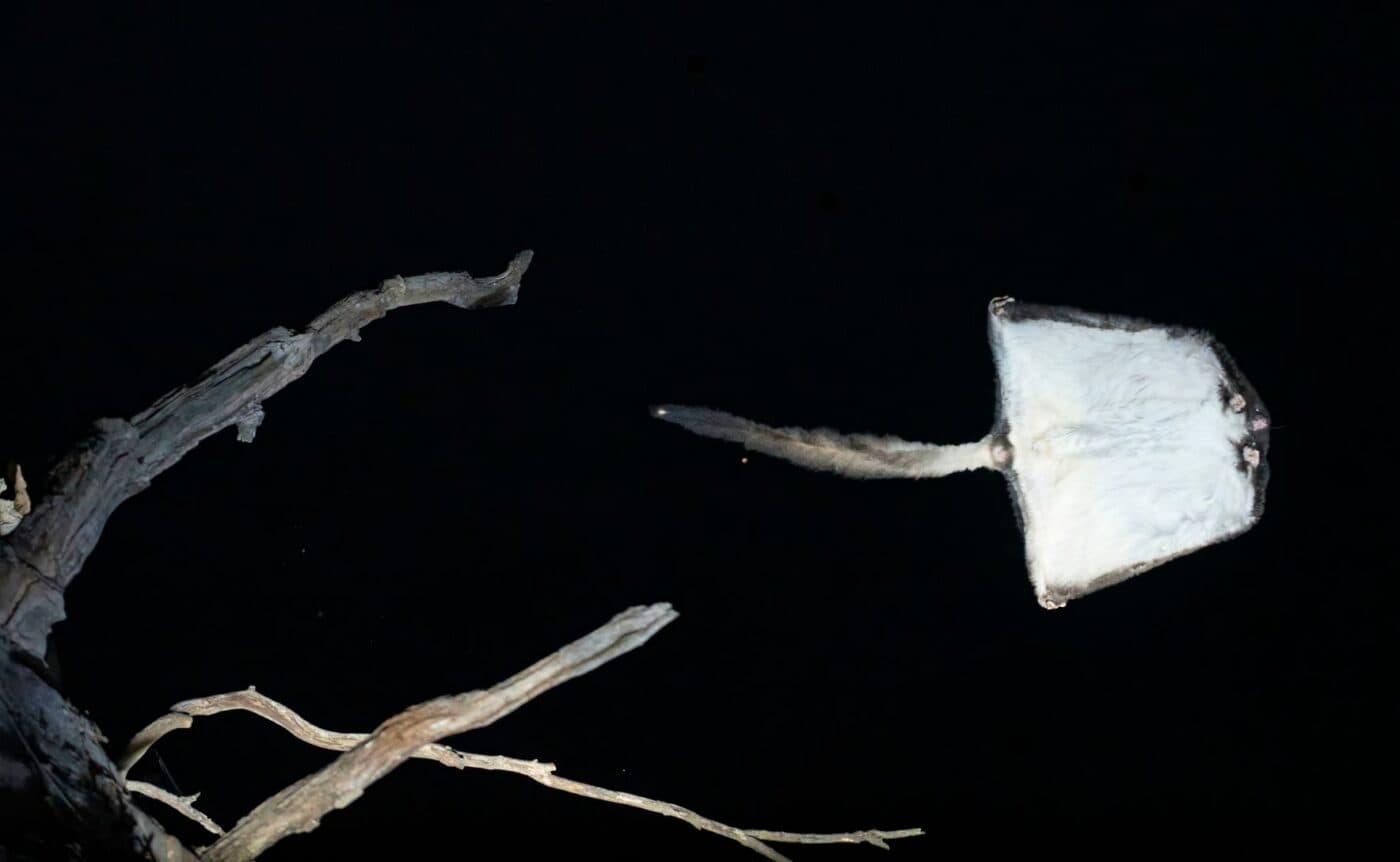
Researchers tracked southern greater gliders in the wild to produce the first scientific measurements of the endangered species’ gliding behaviour. Image: David Gallan
“The origin of the 100-metre figure appears to have originated from a report in the 1940s that was almost certainly describing a different species – the yellow-bellied glider,” Dr Gracanin said.
Unlike other gliding marsupials, greater gliders have a smaller gliding membrane relative to their body size, with the membrane extending from the elbows rather than the wrists, which reduces the amount of lift they can generate.
The findings have important implications for conservation. Listed as endangered following significant population declines, including during the Black Summer bushfires, greater gliders spend almost their entire lives in the forest canopy.
Roads, logging and land clearing can create gaps they struggle to cross, forcing them to the ground where they are vulnerable to predators and vehicle strikes.
“Because greater gliders are not particularly efficient gliders, gaps in the canopy can become major barriers to movement,” co-author Dr Kara Youngentob from the Fenner School of Environment and Society said.
“If individuals can’t move between forest patches, populations become isolated and access to food, shelter and breeding opportunities is reduced.”
The researchers say the findings provide the first evidence-based benchmark for conservation planning, helping guide the design of wildlife crossings, canopy bridges, glider poles and other connectivity structures.
Co-author Dr Rodney van der Ree, an expert in ecology from WSP and the University of Melbourne, said the study fills an important knowledge gap.
“We found greater gliders travel just over one metre horizontally for every metre of height they lose, giving us a practical benchmark for designing wildlife crossings and other connectivity structures.”
“Until now, there’s been no reliable data to show how the width of roads, transmission lines and other clearings could affect greater glider movements and to guide how far apart crossing structures like glider poles should be spaced.”
The researchers recommend a precautionary approach to habitat restoration and infrastructure planning, with connectivity structures positioned using average rather than rare maximum-distance glides.
“The better we understand how greater gliders move through the landscape, the better we can protect the forests and connections they need to survive,” Dr Gracanin said.
The study is published in Australian Mammalogy.
Related articles

Native forest logging will now be subject to national environmental standards – legally binding rules to set clear goals for environmental protection. But where are the details of these standards? And how will they be enforced and monitored?

Fenner researchers, Maldwyn John Evans, Chris Taylor and Prof David Lindenmayer explain what needs to be done to restore Victoria’s forest after logging.

Ecologists were shocked by a recent announcement by New South Wales environment authorities that they believe loosens protections for southern greater gliders in logging areas.