

Genetic rescue plan offers hope for critically endangered King Island scrubtit
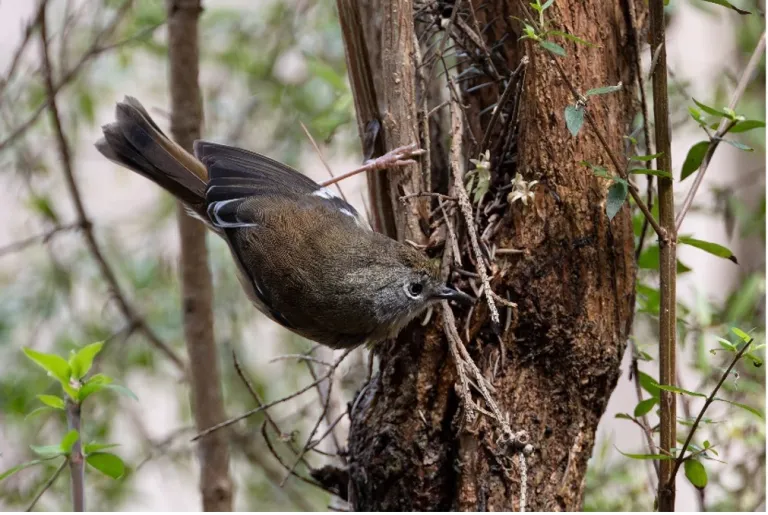
A multi-institutional research team led by the Australian National University, the University of Sydney, Biodiversity Maintenance Australia and Charles Sturt University has completed a major study into the genetics, health and habitat of the King Island scrubtit (Acanthornis magna greeniana), one of Australia's rarest birds. With an estimated total population of just 100 individuals confined to three isolated patches of swamp forest on King Island in Bass Strait, the subspecies has been ranked among the Australian birds most likely to become extinct within the next two decades.
Dangerously inbred and isolated
Whole-genome sequencing of 22 King Island scrubtits, compared against 20 of their mainland Tasmanian relatives, confirmed that the island's three subpopulations – at Colliers Swamp, The Nook and Pegarah Forest – are genetically isolated from one another, with effectively no natural movement of birds between sites. The number of breeding birds in each subpopulation was estimated at just 23, 19 and six respectively, with a combined upper estimate of only 78 breeding individuals across the entire subspecies.
Birds at Colliers Swamp showed the highest inbreeding, with more than 30% of their genome lacking any genetic variation, compared with around 24% at Pegarah Forest and 13% at The Nook. The Nook holds the most genetic diversity remaining in the subspecies, making its ongoing protection a conservation priority and the most likely source of birds should genetic mixing between subpopulations go ahead.

Researchers collected blood, swab and faecal samples from King Island scrubtits to assess disease and genetic health.
Disease screening and crown baldness
Blood, swab and faecal samples collected from birds found Avian polyomavirus DNA was detected in blood samples from birds across all three subpopulations, though its significance for the birds' health is not yet understood and warrants further investigation. No other diseases were detected that may impact the assisted movement of individuals within King Island.
The study also revisited a mysterious condition known as crown baldness, which affected almost half of the birds sampled during a dry year in 2022.

King Island scrubtit showed crown baldness in 2022. Source: Crates et al. (2024)
None of the 18 birds captured during the wetter 2025/26 field season showed severe baldness, and genomic analysis found no link between the condition and inbreeding, suggesting environmental conditions such as drought may play a greater role.
Charting a path forward
Researchers also banded 18 birds with individual coloured leg band combinations to support long-term population monitoring, and identified six candidate locations for establishing a fourth King Island scrubtit population. Attempts to locate and monitor active nests proved extremely difficult given the dense swamp habitat the birds occupy, and the team recommends that future monitoring rely on broader occupancy and acoustic surveys, colour-banding and population genetics rather than intensive nest searches.
Together, the findings provide the evidence base needed to design a genetic rescue program – potentially involving the careful translocation of birds between subpopulations or into new habitat – aimed at boosting genetic diversity and reducing the risk that a single catastrophic event, such as a wildfire, could wipe out one of the world's most threatened bird subspecies.

A King Island scrubtit held briefly during banding and sampling. © Ross Crates
“This research gives us a clear genetic picture of just how isolated and inbred these tiny populations have become,” said lead researcher Dr Ross Crates from the ANU Difficult Bird Research Group. “It also gives us a practical roadmap – from protecting the genetic stronghold at The Nook, to identifying new habitat for translocations – to give the King Island scrubtit a fighting chance.”
Background
The King Island scrubtit is a small, ground-dwelling songbird restricted to remnant patches of swamp paperbark forest on King Island in Bass Strait. It is listed as critically endangered and is a priority species under the Australian Government's Saving Native Species Program. This research was led by Dr Ross Crates (Australian National University), with collaborators from the University of Sydney's Australian Wildlife Genomics Group, Biodiversity Maintenance Australia and Charles Sturt University.
Media contact
Dr Ross Crates, Fenner School of Environment and Society, Australian National University – ross.crates@anu.edu.au

King Island Scrubtit having coloured leg bands attached. © Ross Crates

A King Island scrubtit with orange band on left leg. © Tim Paasila